
Silane End Cappers
Isocyanatopropylmethyldimethoxysilane | Manta S121
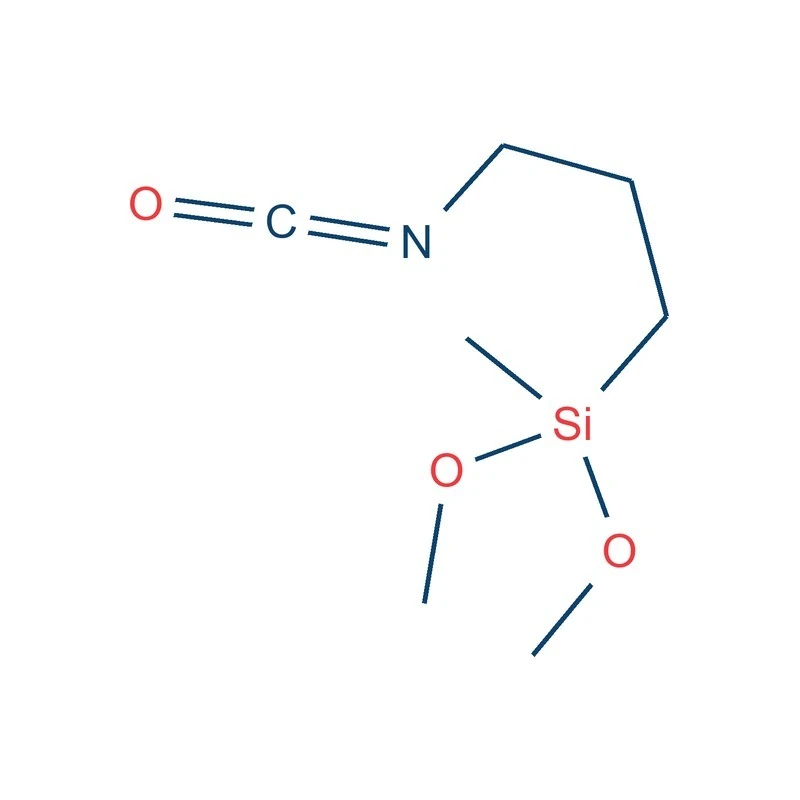
Manta S121 is (3-isocyanatopropyl)methyldimethoxysilane (CAS 26115-72-0), an isocyanate-functional dialkoxy silane used as an end-capping agent for polyols in low-modulus silane-modified polymer (SMP) and SPUR sealants. Its methyldimethoxy structure promotes linear chain extension rather than a rigid 3D network, and it releases methanol on hydrolysis.
- Grade
- S121
- Chemical Name
- (3-Isocyanatopropyl)methyldimethoxysilane
- CAS No.
- 26115-72-0
- Synonyms
- (gamma-Isocyanatopropyl)methyldimethoxysilane
- Form
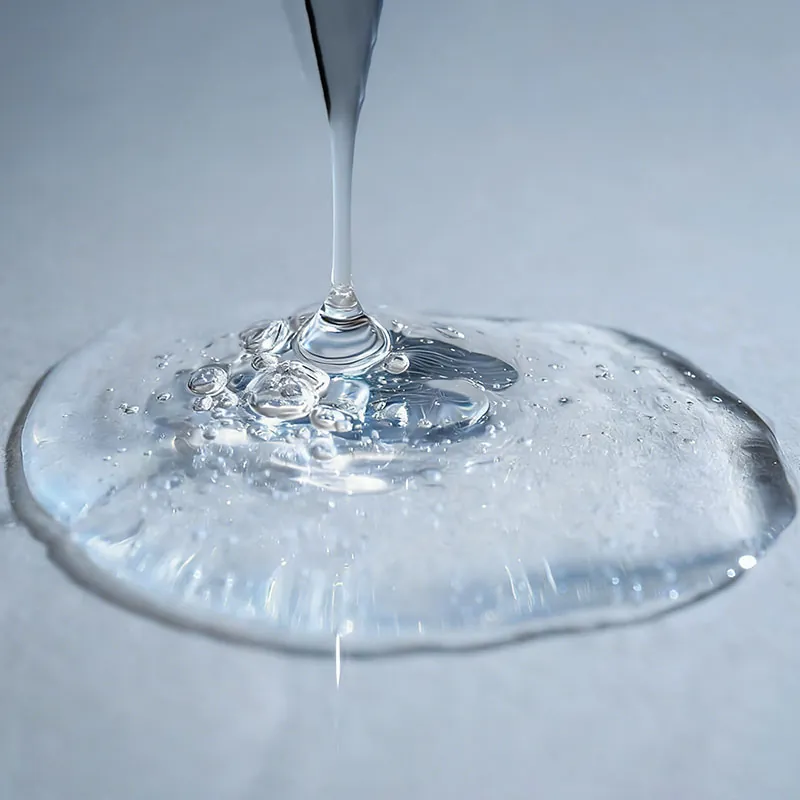
- Straw liquid
Overview
Manta S121 is a bifunctional organosilane with a reactive isocyanate group and a methyldimethoxy silyl group. Standard trialkoxy silanes form rigid 3D crosslinked networks; the dialkoxy structure of S121 instead promotes linear chain extension during moisture curing.
This makes S121 an end-capping agent for producing elastic, low-modulus polymers with high elongation. The isocyanate group reacts rapidly with active hydrogen-containing species such as amines, hydroxyls and thiols, and the silane improves coupling and adhesion to organic and inorganic substrates.
S121 and Manta S122 are both dialkoxy isocyanatosilanes. S121 carries methoxy groups and releases methanol on hydrolysis, while S122 carries ethoxy groups and releases ethanol. Compared with the trimethoxy grade Manta S310, S121 gives lower crosslink density and a softer cured elastomer.
Key Features
- Methyldimethoxy structure reduces crosslink density for softer, lower-modulus elastomers
- Chain extender in urethane and polyol systems, improving elongation at break
- Isocyanate group reacts rapidly with amines, hydroxyls and thiols
- Improves coupling and adhesion to organic and inorganic substrates
- Releases methanol on hydrolysis
Cross-Reference
Manta S121 can be considered as an alternative to Shin-Etsu KBM-9207.
Trademarks are the property of their respective owners; no affiliation is implied.
Specifications
| Property | Typical Value |
|---|---|
| Molecular Weight | 189.28 |
| Appearance | Straw liquid |
| Purity (by GC, %) | 98.00 min |
| Density (ρ20°C, g/cm³) | 0.950-1.050 |
| Refractive Index (n25/D) | Approx. 1.4200 |
| Boiling Point | 194°C |
| Flash Point | Approx. 71°C closed cup |
Typical values from the current Technical Data Sheet.
Applications
- Low-modulus MS and SPUR sealants: end-capping of polyols to synthesize high-movement silane-modified polymers and SPUR sealants for construction joints subject to thermal expansion and contraction
- Flexible adhesives and coatings: additive or modifier in polyurethane adhesives and coatings that need impact resistance, high flexibility and stress relaxation
- Coupling agent: coupling between inorganic substrates and amine- or hydroxyl-functional polymers
Related applications: Adhesives & Sealants · Paints & Coatings
Packaging & Storage
Supplied in 20 kg, 25 kg iron pail, 200 kg drum.
Safety and Storage
Keep in a cool and dry place and avoid storage in direct sunlight. Shelf life is min. 12 months. It is shipped as hazardous substance.
Documents
- Technical Data Sheet · PDF Download TDS
- SDS and COA · on request Request Documents
Frequently Asked Questions
When should Manta S121 be chosen over a trimethoxy isocyanatosilane like Manta S310?
Choose S121 when the target sealant must be soft and highly elastic. Its methyldimethoxy configuration reduces crosslink density and promotes linear chain extension, giving low-modulus, high-elongation elastomers, whereas trimethoxy types such as S310 build more rigid 3D networks.
What does the isocyanate group of Manta S121 react with?
It reacts rapidly with active hydrogen-containing species such as amines, hydroxyls and thiols. This makes S121 suitable for end-capping polyols in SMP and SPUR synthesis and for chain extension in urethane systems, where it improves elongation at break.
How is Manta S121 packaged, stored and shipped?
Packaging: 20 kg, 25 kg iron pail, 200 kg drum. Keep in a cool and dry place and avoid storage in direct sunlight. Shelf life is min. 12 months. It is shipped as a hazardous substance.
Related Products
S121 is one step in the sealant and adhesive formulation chain. One inquiry can cover the other raw materials in your formulation, with samples, technical documents, quotation and shipment handled together.
Looking for a different purity, functional group, or a structure not listed here? Contact our technical team.
Talk to our technical team
Tell us your application, target properties and estimated quantity. We will suggest grades and arrange documents or samples.