
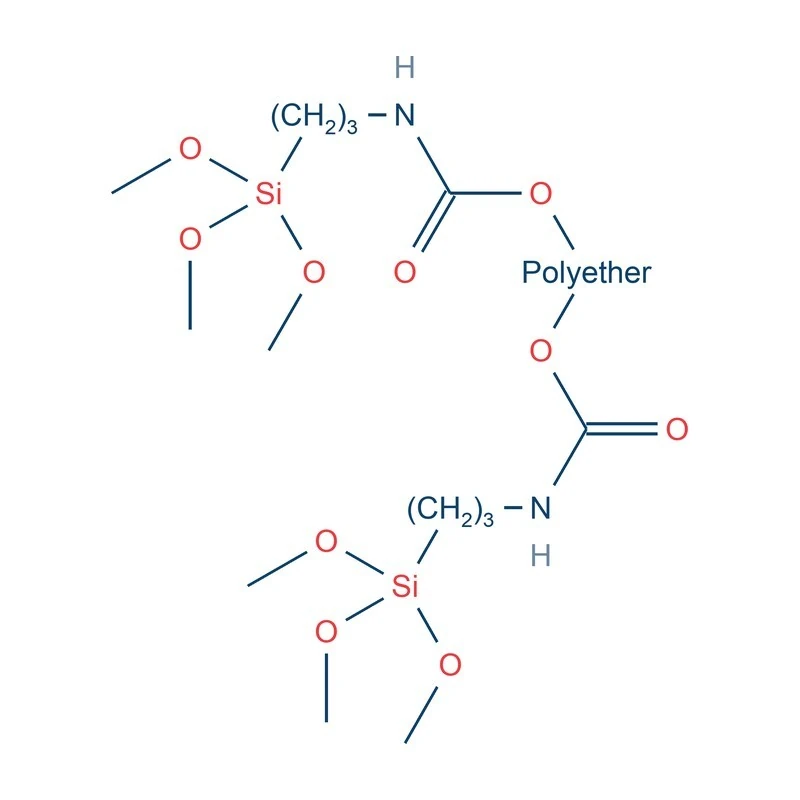
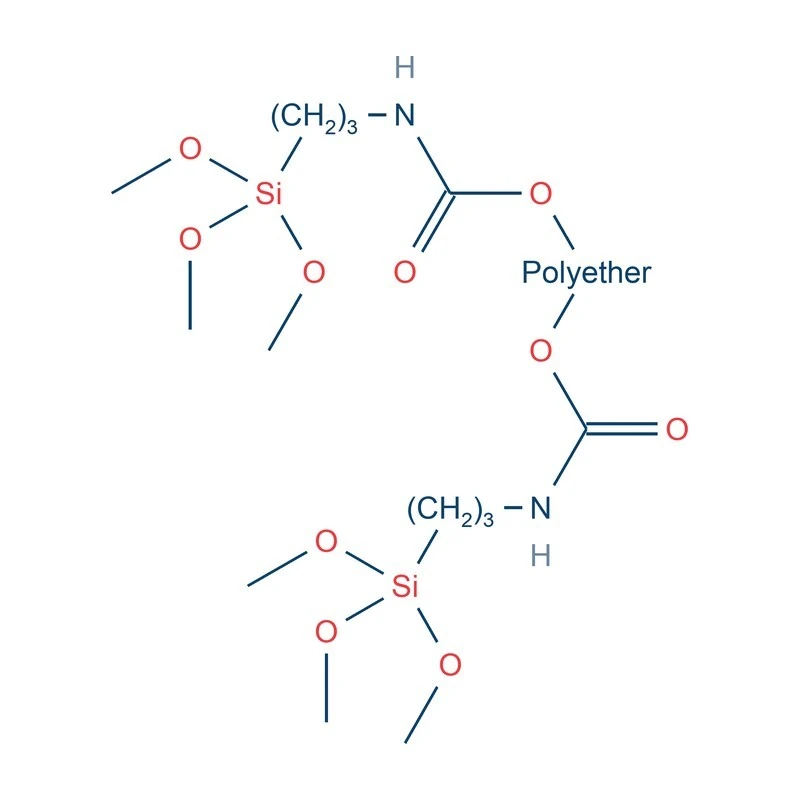
Trimethoxysilyl STPE
MS Polymer for Elastic Adhesives | Manta MS330C
Manta MS330C is a silyl-terminated polyether (CAS 216597-12-5) based on a linear polypropylene oxide chain capped with trimethoxysilylpropylcarbamate groups, with high reactivity and medium-high modulus. It is intended for elastic, moisture-cure sealants and adhesives, contains no solvents or isocyanates, and cures without bubbles and with low odor.
- Grade
- MS330C
- Chemical Name
- Trimethoxysilylpropylcarbamate-terminated polyether (polyether reacted with 3-isocyanatopropyltrimethoxysilane)
- CAS No.
- 216597-12-5
- Form
- Colorless, transparent viscous liquid
Overview
Manta MS330C is a silyl-terminated polyether (STPE), also referred to as a silane-modified polymer (SMP), based on a linear polypropylene oxide (PPO) chain capped with trimethoxysilylpropylcarbamate groups. When exposed to humidity, its silane end groups hydrolyze with release of methanol and condense into a dense siloxane network.
The polymer contains no solvents or isocyanates, cures without bubbles and with low odor, and provides high adhesive strength together with good elastic recovery on many substrates. Its medium viscosity allows efficient mixing with standard fillers and additives, and conventional mixing and compounding equipment is suitable.
MS330C is listed with the same viscosity (25,000 – 35,000 mPa·s at 25 °C), activity and modulus as Manta MS330A. The MS330C data sheet gives a reference formulation in parts by weight, while the MS330A data sheet gives a starting elastic sealant formulation in percent by weight with cured sealant properties. Manta MS312 shares the same end groups at a lower viscosity and with medium activity.
Key Features
- Fast skin formation from high reactivity, with a medium-high modulus
- Good mechanical strength with high recovery for moving joints
- Free of solvents and isocyanates, with no bubbles during crosslinking
- Suitable for low-VOC products
- High transparency and good yellowing resistance for clear sealants and coatings
- Medium viscosity for efficient mixing with standard fillers and additives
- Bonds to many porous and non-porous substrates, often without a primer
Cross-Reference
Manta MS330C can be considered as an alternative to Wacker GENIOSIL STP-E35.
Trademarks are the property of their respective owners; no affiliation is implied.
Specifications
| Property | Typical Value |
|---|---|
| Appearance | Colorless, transparent viscous liquid |
| Flash Point | 237 °C |
| Viscosity (25 °C) | 25,000 – 35,000 mPa·s |
| Density (25 °C) | 1.02 – 1.05 g/cm³ |
| Catalyst Dosage (Tin, on polymer) | 1 – 2 % |
| Activity | High |
| Modulus | Medium-high |
Typical values from the current Technical Data Sheet.
Typical Performance of a Reference Sample
| MS330C Test Item | Standard | Result |
| Appearance | Colorless, transparent liquid | Colorless, transparent liquid |
| Viscosity (25 °C), mPa·s | 20,000 – 30,000 | 25,790 |
| pH Value | 6 – 9 | 7.0 |
| Tensile Strength, MPa | ≥ 0.5 | 0.82 |
| Elongation at Break, % | ≥ 80 | 136 |
| Hardness, Shore A | ≥ 30 | 32 |
Applications
- Transportation: elastic sealing of vehicle bodies, rail vehicles and containers where resistance to vibration is needed
- Building and construction: can be formulated into low- to medium-modulus joint sealants for buildings and infrastructure with good weatherability
- Clear products: transparent adhesives, for example for decorative glass; can be evaluated for clear potting of electronic components, with electrical properties to be verified
- Interior applications: DIY and professional adhesives and sealants for indoor use; suitable for low-VOC formulations
- Coatings: flexible protective and sealing coatings with good adhesion to metals and plastics
Processing
Manta MS330C dissolves in common organic solvents and is practically insoluble in water. Moisture causes slow hydrolysis with release of methanol, followed by condensation to a siloxane network. The uncatalyzed polymer is stable in air for a limited period, but storage and processing should take place under exclusion of moisture to avoid slow condensation.
Conventional mixing and compounding equipment is suitable. For sufficient shelf life of the finished formulation a water scavenger must be added; vinyltrimethoxysilane (VTMO) is recommended to prevent premature gelation in production and storage.
Reference Formulation
| Component | Parts by Weight | Example / Function |
| Manta MS330C | 30 - 40 | Silane-terminated polymer (binder) |
| Plasticizer | 10 - 20 | PPG, DINP, or DOTP |
| Water Scavenger | 1 - 2 | Vinyltrimethoxysilane (VTMO) |
| Thixotropic Agent | 2 - 5 | Fumed Silica (Hydrophilic or Hydrophobic) |
| Fillers | 40 - 50 | Ground Calcium Carbonate (GCC) / TiO2 |
| Antioxidants and UV-stabilizers | 0.1 - 2 | Hindered Phenols (AO) / HALS (UV) |
| Adhesion Promoter | 1 - 2 | Amino-silanes (e.g., AMEO, AMMO) |
| Catalyst | 0.3 - 0.6 | Organotin (DBTDL) or Tin-free alternatives |
Related applications: Adhesives & Sealants
Related reading: Difference Between MS, STPE, SMP, STPU and SPU
Packaging & Storage
50 kg plastic drum with aluminum-foil liner bag;
200 kg drum with aluminum-foil liner bag;
1,000 kg IBC (tote);
Other pack sizes available on request.
Safety and Storage
Store in the tightly closed original container in a cool, dry place, protected from moisture and direct sunlight. Shelf life: 24 months from the date of production when stored as recommended. The product is classified as non-hazardous. Refer to the current Safety Data Sheet (SDS) for safety, handling and transport information.
Note: The values in this data sheet are typical values and are not intended for use in preparing specifications. Users should test the product to determine its suitability for their specific application.
Documents
- Technical Data Sheet · PDF Download TDS
- SDS and COA · on request Request Documents
Frequently Asked Questions
What proportions are used in the MS330C reference formulation?
The reference formulation uses 30 - 40 parts by weight of MS330C, 10 - 20 parts of plasticizer (PPG, DINP or DOTP), 40 - 50 parts of ground calcium carbonate or TiO2 filler and 0.3 - 0.6 parts of organotin (DBTDL) or tin-free catalyst. The other components, including the water scavenger, fumed silica and adhesion promoter, are in the Reference Formulation table on this page.
What catalyst level does MS330C typically require?
Tin catalyst dosage is 1 – 2 % on polymer. The reference formulation uses 0.3 - 0.6 parts by weight of organotin (DBTDL) or tin-free catalyst against 30 - 40 parts of MS330C. Confirm the level against the cure profile of your own formulation.
What does MS330C release as it cures?
Moisture causes slow hydrolysis of MS330C with release of methanol, followed by condensation to a siloxane network. Storage and processing should therefore take place with moisture excluded, and a water scavenger such as vinyltrimethoxysilane (Manta V31) must be added for sufficient shelf life of the finished formulation.
Can MS330C be used for clear encapsulation work?
MS330C is a colorless, transparent polymer with high transparency and good yellowing resistance. It is used in transparent adhesives, for example for decorative glass, and can be evaluated for clear potting of electronic components, with electrical properties to be verified.
Related Products
MS330C is one step in the sealant and adhesive formulation chain. One inquiry can cover the other raw materials in your formulation, with samples, technical documents, quotation and shipment handled together.
- End Cappers
- MS, STPE & SPUR Polymers
- Adhesion Promoters
- Water Scavengers
- Crosslinkers
- Catalysts
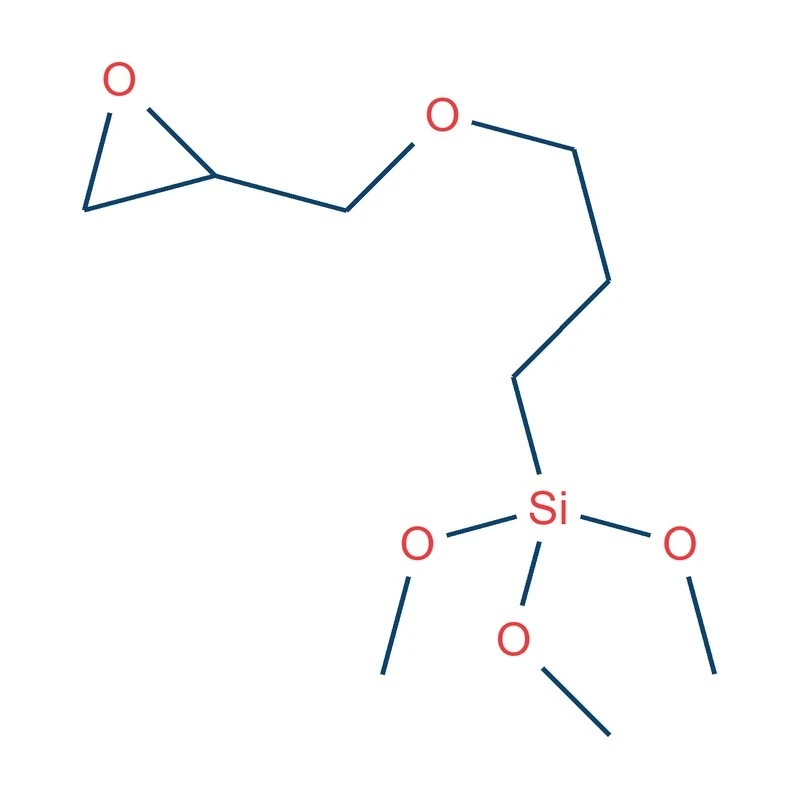
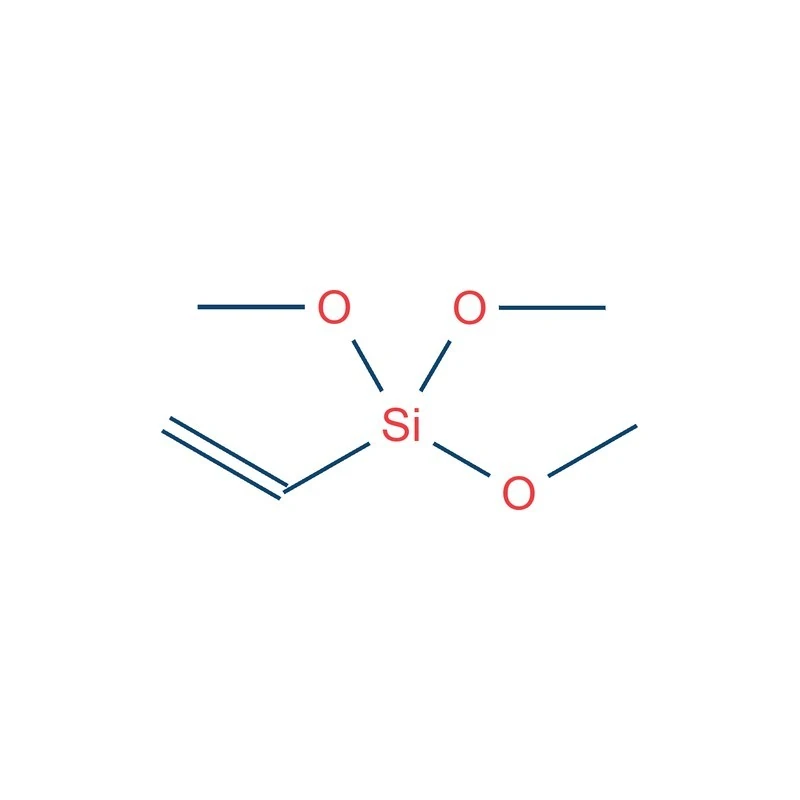
Manta V31
Vinyl-Functional Silane (VTMO) / Crosslinker & Moisture Scavenger
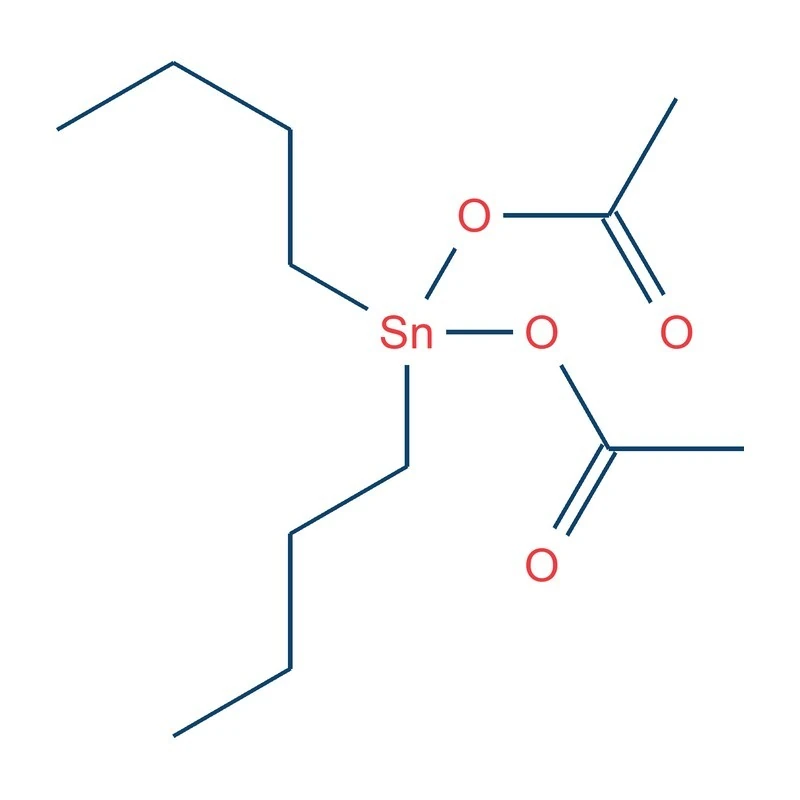
Manta CAT-DBTA
High-Efficiency Organotin Catalyst (Dibutyltin Diacetate)
Need a finished adhesive or sealant rather than the polymer? See our custom MS adhesives and sealants service.
Talk to our technical team
Tell us your application, target properties and estimated quantity. We will suggest grades and arrange documents or samples.