Manta CAT-DOTDL
Organotin Catalyst & Lubricant (Dioctyltin Dilaurate)
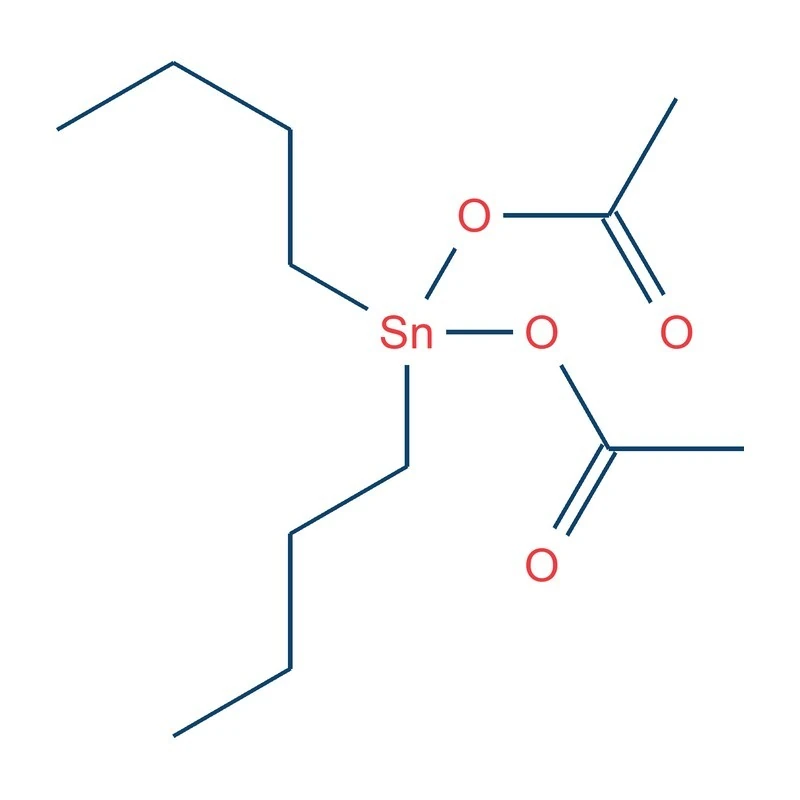
Manta CAT-DBTA is dibutyltin diacetate (CAS 1067-33-0), an organotin catalyst for silanol condensation, polyurethane crosslinking and transesterification, used in rigid polyurethane foams, RTV silicones that need fast skin-over, fast-drying industrial coatings and adhesives. Its tin content is 33.4% – 34.4%, higher than that of dibutyltin dilaurate.
Manta CAT-DBTA is a dibutyltin diacetate (DBTA/DBTDA) catalyst for applications that need rapid reaction kinetics. It accelerates transesterification, silanol condensation and polyurethane crosslinking, and suits industrial processes where short cycle times and quick green strength matter.
Its tin content is higher than that of Manta CAT-DBTDL, and it gives shorter gel and tack-free times than standard organotin catalysts. The product is sensitive to moisture, so containers must stay tightly sealed.
Dibutyltin compounds are regulated in several markets. In the EU, REACH Annex XVII entry 20 restricts them in mixtures and articles supplied to the general public above the tin limit set in that entry. CAT-DBTA is intended for industrial formulation. Check the rules for your market and end use, and refer to the Safety Data Sheet.
| Property | Typical Value |
|---|---|
| Molecular Weight | 351.03 |
| Appearance | Slightly yellow liquid (No mechanical impurities) |
| Tin Content (%) | 33.4% – 34.4% |
| Density (ρ25°C, g/cm³) | 1.31 |
| Color (Pt-Co) | ≤200 |
| Volatile (%) | ≤ 0.4% |
Typical values from the current Technical Data Sheet.
Related applications: Adhesives & Sealants · Paints & Coatings · Plastics & Masterbatches · Rubber & Tires
Supplied in 25 kg pail, 200 kg drum.
Storage: Store in a cool, dry, and well-ventilated area. Manta CAT-DBTA is sensitive to moisture; ensure containers are tightly sealed to prevent hydrolysis.
Shelf Life: 12 months in original, unopened containers when stored correctly.
Both are dibutyltin catalysts. CAT-DBTA has a tin content of 33.4% – 34.4% and is the faster of the two, while CAT-DBTDL has a tin content of 18.0%-19.2% and gives a more balanced profile. Choose by the gel time and pot life your system needs.
Store in a cool, dry, and well-ventilated area. Manta CAT-DBTA is sensitive to moisture; ensure containers are tightly sealed to prevent hydrolysis.
Dibutyltin compounds are restricted in the EU in mixtures and articles supplied to the general public above the tin limit in REACH Annex XVII entry 20. CAT-DBTA is intended for industrial formulation. Check the rules for your market and end use.
CAT-DBTA is one step in the sealant and adhesive formulation chain. One inquiry can cover the other raw materials in your formulation, with samples, technical documents, quotation and shipment handled together.
Tell us your application, target properties and estimated quantity. We will suggest grades and arrange documents or samples.