
Crosslinkers & Modifiers
Diphenyldimethoxysilane | Manta PD21
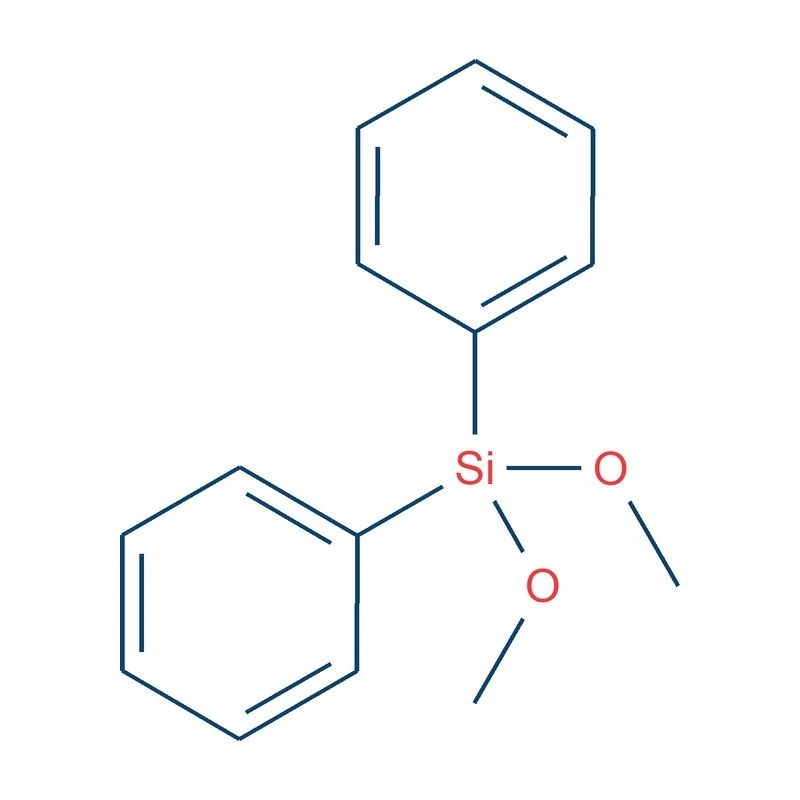
Manta PD21 is diphenyldimethoxysilane (CAS 6843-66-9), a bifunctional monomer with two phenyl groups used to synthesize phenyl-silicone resins and high-temperature silicone fluids and to raise refractive index in LED encapsulants and optical coatings. The two phenyl groups give higher thermal and oxidative stability than mono-phenyl silanes.
- Grade
- PD21
- Chemical Name
- Diphenyldimethoxysilane
- CAS No.
- 6843-66-9
- EINECS
- 229-929-1
- Formula
- C14H16O2Si
- Form
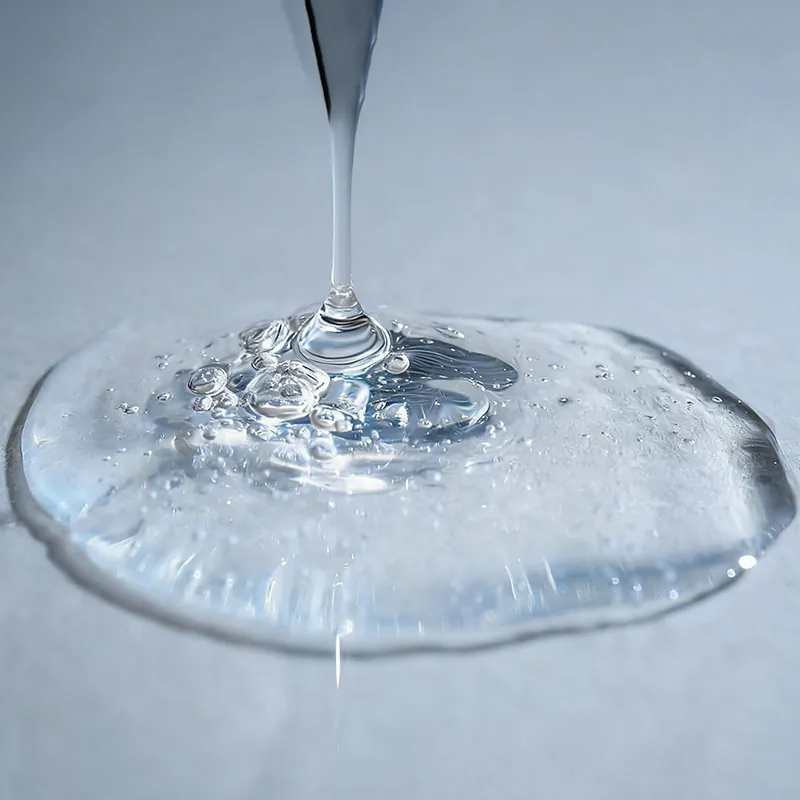
- Colorless Transparent Liquid
Overview
Manta PD21 is diphenyldimethoxysilane, with two bulky phenyl groups attached to the silicon atom. This configuration provides higher thermal and oxidative stability than mono-phenyl silanes. With a refractive index of 1.5350~1.5450, it is used in high-performance optical materials and specialty silicone resins.
As a bifunctional monomer, PD21 is a structural building block in the synthesis of silicone fluids, resins and polymers. Its two methoxy groups allow the creation of linear siloxane chains or the modification of resin backbones, and treated surfaces gain a hydrophobic finish with good heat resistance.
Manta P31 is the mono-phenyl trimethoxy grade. PD21 has two phenyl groups and two methoxy groups, a higher refractive index (1.5350~1.5450 against 1.4650–1.4750) and a bifunctional structure that builds linear chains, while P31 carries three methoxy groups. Both release methanol on hydrolysis.
Key Features
- Two phenyl groups on silicon for thermal and oxidative stability
- High refractive index for LED and display applications
- Helps to limit yellowing and degradation at high temperatures
- Bifunctional structure for linear siloxane chains and resin backbone modification
- Long-lasting moisture barrier on treated surfaces
Cross-Reference
Manta PD21 can be considered as an alternative to Shin-Etsu KBM-202SS.
Trademarks are the property of their respective owners; no affiliation is implied.
Specifications
| Property | Typical Value |
|---|---|
| Molecular Weight | 244.36 |
| Appearance | Colorless Transparent Liquid |
| Density (ρ20°C, g/cm³) | 1.000-1.100 |
| Refractive Index (n25/D) | 1.5350~1.5450 |
| Purity (by GC, %) | 98.0 min |
| Boiling Point | 286°C |
| Flash Point | 121°C |
Typical values from the current Technical Data Sheet.
Applications
- Silicone resins and fluids: intermediate for phenyl-silicone resins and high-temperature silicone oils, improving the heat resistance and oxidation stability of lubricants, hydraulic fluids and insulating oils in aerospace and automotive sectors
- LED encapsulation and optical displays: LED packaging and optical lens coatings, helping to maximize light output and maintain clarity by resisting UV-induced and thermal yellowing
- Resin modification: acrylic, epoxy and polyester resins, improving thermal stability and hydrophobicity; in acrylic systems it can improve weatherability and surface hardness while maintaining optical clarity
- Surface treatment: hydrophobic modifier for glass, ceramics and inorganic fillers, and additive to other silane coupling agents to boost their heat resistance
- Chemical intermediate: precursor for more complex organofunctional phenyl silanes and siloxanes
- Semiconductor packaging: additive in epoxy molding compounds (EMC) to reduce thermal expansion and improve package reliability during thermal cycling
Related applications: Paints & Coatings
Packaging & Storage
Supplied in 25 kg pail, 200 kg drum and 1000 kg IBC.
Safety and Storage
Keep away from heat and open flame. When stored at or below 25 °C in the original unopened containers, this product has a usable life of 24 months from the date of production.
Documents
- Technical Data Sheet · PDF Download TDS
- SDS and COA · on request Request Documents
Frequently Asked Questions
Why is Manta PD21 used in LED encapsulation and optical displays?
Its refractive index of 1.5350~1.5450 helps to maximize light output from LED packages and optical lens coatings, and it resists UV-induced and thermal yellowing, which helps to maintain long-term optical clarity.
How does Manta PD21 differ from a mono-phenyl silane such as Manta P31?
Manta PD21 carries two phenyl groups on silicon, which gives higher thermal and oxidative stability than mono-phenyl silanes and a higher refractive index (1.5350~1.5450 against 1.4650–1.4750 for P31). Its two methoxy groups make it bifunctional, so it builds linear siloxane chains rather than the 3D networks formed by trimethoxy silanes.
What role does Manta PD21 play in semiconductor packaging?
In electronic packaging it is added to epoxy molding compounds (EMC) to reduce thermal expansion and improve package reliability during thermal cycling.
Can I test Manta PD21 before placing an order?
Yes. Samples are charged. The sample fee includes courier delivery and is deducted from your first formal order. Use Request a Sample and tell us the quantity and your application. The TDS is on this page; SDS and COA are available on request.
Related Products
PD21 is one step in the sealant and adhesive formulation chain. One inquiry can cover the other raw materials in your formulation, with samples, technical documents, quotation and shipment handled together.
Looking for a different purity, functional group, or a structure not listed here? Contact our technical team.
Talk to our technical team
Tell us your application, target properties and estimated quantity. We will suggest grades and arrange documents or samples.