
Silanes & Alkyl Silanes
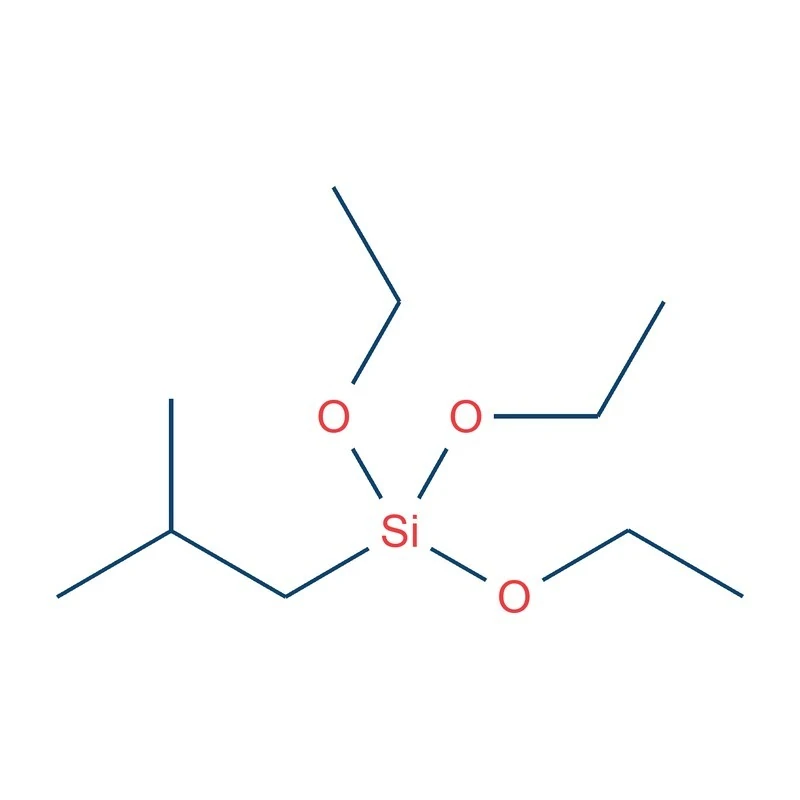
Isobutyltriethoxysilane | Manta LB320
Manta LB320 is isobutyltriethoxysilane (CAS 17980-47-1), an undiluted branched alkyl silane used as a deep-penetrating water repellent for concrete, brick and natural stone, as an external electron donor in Ziegler-Natta polypropylene catalysis, and as a surface modifier for pigments and mineral fillers. It releases ethanol rather than methanol on hydrolysis.
- Grade
- LB320
- Chemical Name
- iso-Butyltriethoxysilane
- CAS No.
- 17980-47-1
- EINECS
- 402-810-3
- Synonyms
- Triethoxyisobutylsilane
- Form
- Colorless transparent liquid
Overview
Manta LB320 is an undiluted isobutyltriethoxysilane. Its small molecular structure and stable branched isobutyl group allow deep penetration into porous cementitious and mineral surfaces.
In highly alkaline environments such as freshly cast concrete, it reacts with moisture to produce silanol groups that chemically bond with the substrate and build a durable, three-dimensional hydrophobic network. This internal treatment significantly reduces capillary water absorption while retaining the substrate's original appearance and breathability.
Its ethoxy groups liberate ethanol rather than methanol on reaction with moisture, which is a relevant selection factor for indoor infrastructure. Compared with Manta LO320, which carries a branched eight-carbon isooctyl group, LB320 has a shorter four-carbon isobutyl group, and its TDS also covers use as an external electron donor in polypropylene polymerization.
Key Features
- Small molecular structure for deep penetration into porous mineral surfaces
- Branched isobutyl group that lowers surface energy on treated fillers
- Durable three-dimensional hydrophobic network in alkaline substrates
- Significantly reduces capillary water absorption
- Retains the substrate's original appearance and breathability
- Releases ethanol rather than methanol on hydrolysis
Cross-Reference
Manta LB320 can be considered as an alternative to Dow XIAMETER OFS-6403, Wacker GENIOSIL IBTE CE, Evonik Dynasylan IBTEO and Evonik Catylen D 1200.
Trademarks are the property of their respective owners; no affiliation is implied.
Specifications
| Property | Typical Value |
|---|---|
| Appearance | Colorless transparent liquid |
| Purity (by GC, %) | 98.0 min |
| Density (ρ20°C, g/cm³) | 0.8800 ± 0.0050 |
| Refractive Index (nD 25°C) | 1.4000 ± 0.0050 |
Typical values from the current Technical Data Sheet.
Applications
- Ziegler-Natta catalyst donor: external electron donor in Ziegler-Natta catalyst systems for polypropylene polymerization, providing stereoselectivity control for high isotacticity and good mechanical properties in the final polymer
- Architectural water repellent: deep-penetrating sealer for concrete, brick and natural stone that helps to limit freeze-thaw damage and chloride ion ingress, including in indoor infrastructure
- Mineral filler surface modification: inorganic pigments and mineral fillers such as ATH, silica and talc, improving filler dispersion and compatibility in non-polar polymer matrices
Related applications: Concrete, Masonry & Stone Protection
Packaging & Storage
Supplied in 20 kg pail, 180 kg drum and 900 kg IBC.
Safety and Storage
Keep in a cool and dry place and avoid storage in direct sunlight. Shelf life is 12 months. Not regulated as dangerous goods for transport; refer to the Safety Data Sheet for hazard classification and safe handling.
Documents
- Technical Data Sheet · PDF Download TDS
- SDS and COA · on request Request Documents
Frequently Asked Questions
What role does Manta LB320 play in Ziegler-Natta polypropylene production?
It acts as an external electron donor in Ziegler-Natta catalyst systems for polypropylene polymerization, providing stereoselectivity control that gives high isotacticity and good mechanical properties in the final polymer.
Why is LB320 used for indoor concrete protection?
Its ethoxy groups liberate ethanol rather than methanol on reaction with moisture, which is a relevant selection factor for indoor infrastructure. In highly alkaline fresh concrete it forms silanols that bond into a durable three-dimensional hydrophobic network, reducing capillary water absorption while retaining appearance and breathability. Follow the Safety Data Sheet for ventilation and handling.
How does the branched isobutyl group help in filler modification?
The branched isobutyl group lowers surface energy on inorganic pigments and fillers such as ATH, silica and talc, improving their dispersion and compatibility within non-polar polymer matrices.
Related Products
LB320 is one step in the building protection formulation chain. One inquiry can cover the other raw materials in your formulation, with samples, technical documents, quotation and shipment handled together.
- Alkyl Silane Actives
- Emulsions & Pastes
- Siliconate Liquids & Powders
- Waterproof Coatings
Looking for a different purity, functional group, or a structure not listed here? Contact our technical team.
Talk to our technical team
Tell us your application, target properties and estimated quantity. We will suggest grades and arrange documents or samples.