
Adhesion Promoters
Aminoethylaminopropyltrimethoxysilane | Manta A112
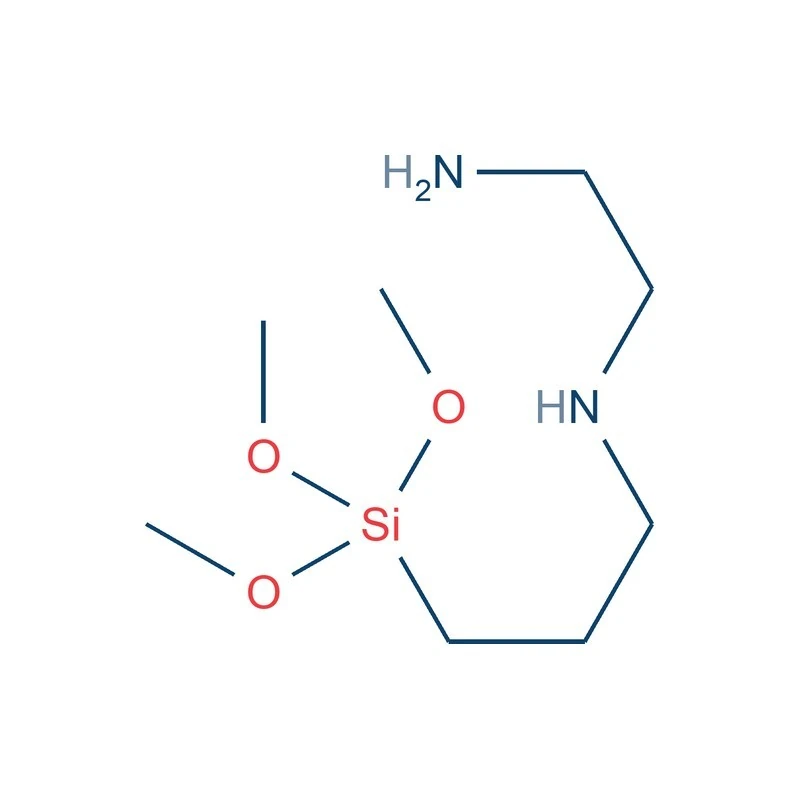
Manta A112 is N-β-(aminoethyl)-γ-aminopropyltrimethoxysilane (CAS 1760-24-3), a diamino-functional silane used as an adhesion promoter and coupling agent in RTV silicone, polysulfide and plastisol sealants, 2K epoxy and polyurethane coatings and glass fiber sizing. Its primary and secondary amines give higher bond strength on difficult substrates than standard mono-amino silanes.
- Grade
- A112
- Chemical Name
- N-β-(aminoethyl)-γ-Aminopropyltrimethoxysilane
- CAS No.
- 1760-24-3
- EINECS
- 217-164-6
- Formula
- C8H22N2O3Si
- Synonyms
- [3-(2-Aminoethyl)aminopropyl]trimethoxysilane
- Form
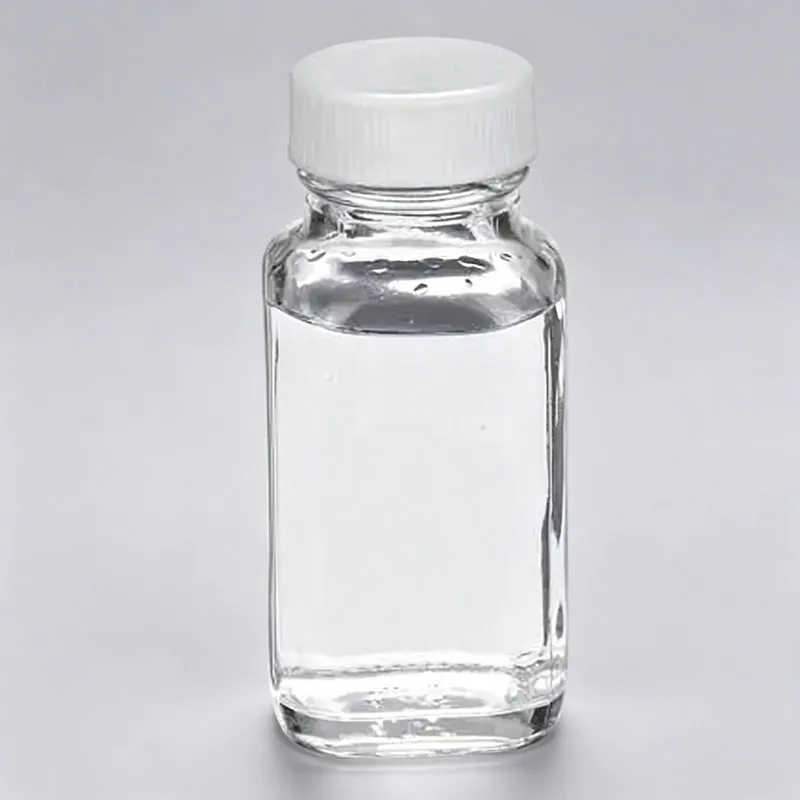
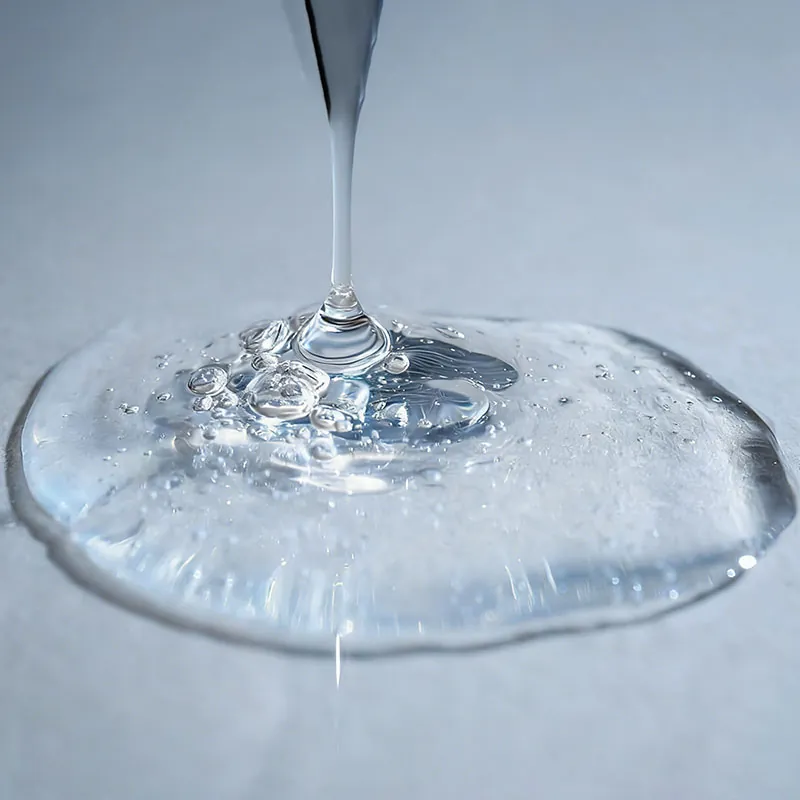
- Colorless transparent liquid
Overview
Manta A112 is a bifunctional organosilane with two reactive amino groups, primary and secondary, and one hydrolyzable trimethoxysilyl group. Its 2-aminoethylaminopropyl structure provides higher bond strength to difficult inorganic and organic substrates than standard mono-amino silanes.
A112 reduces filler sedimentation tendencies, improves dispersibility and enhances the mechanical and electrical properties of composites and sealants. In many sealant systems it can reduce the need for separate surface primers, and in polysulfide sealants it produces cohesive failure in the sealant rather than adhesive failure at the interface.
Compared with the mono-amino grades Manta A110 and Manta A111, A112 adds a secondary amine for crosslinking with organic resins. Manta A112T is the technical-grade version with an active content of 85% min., designed for faster dispersion into high-viscosity resins.
Key Features
- Primary and secondary amines crosslink with epoxies, polyurethanes, phenolics and acrylics
- Trimethoxysilyl group gives rapid hydrolysis and a dense 3D siloxane network on inorganic surfaces
- Improves the resistance of cured polymers to moisture, vapor and corrosion
- Can reduce the need for separate surface primers
- Reduces filler sedimentation and improves dispersibility
- Higher bond strength on difficult substrates than standard mono-amino silanes
Cross-Reference
Manta A112 can be considered as an alternative to Momentive Silquest A-1120 / A-1122, Dow Z-6020 (OFS-6020), Evonik Dynasylan DAMO, Wacker GENIOSIL GF 9 and Shin-Etsu KBM-603.
Trademarks are the property of their respective owners; no affiliation is implied.
Specifications
| Property | Typical Value |
|---|---|
| Molecular Weight | 222.36 |
| Appearance | Colorless transparent liquid |
| Purity (by GC, %) | 98% |
| Density (ρ20°C, g/cm³) | 1.010-1.030 |
| Refractive Index (n25/D) | 1.4430±0.0050 |
| Boiling Point | 261°C |
| Flash Point | 136 °C closed cup |
Typical values from the current Technical Data Sheet.
Applications
- RTV silicones and hybrid sealants: improves adhesion to glass, steel, aluminum and concrete in one- and two-part silicone-crosslinked sealants, and to a wide array of plastics in combination with silylated polyurethane (SPUR) technology
- Polysulfide sealants: adhesion to glass, aluminum and steel in one- and two-part systems, producing cohesive failure in the sealant rather than adhesive failure at the interface
- Plastisol sealants: replacement for polyaminoamide adhesion promoters, improving bonding to metal while keeping a very light color and a bubble-free cured compound
- Paints and coatings: internal adhesion promoter and crosslinker in 2K epoxy and 2K polyurethane heavy-duty protective coatings, improving inter-coat adhesion and anti-corrosion, salt-spray and chemical resistance on metal
- Glass fiber and mineral wool: sizing and finishing agent that improves flexural and tensile strength and helps to protect the interface from moisture degradation
- Foundry and abrasives: additive to phenolic, furan and melamine resin binders, increasing sand core strength and durability, and enhancing the bond between abrasive grains and resin in grinding wheels
- Phenolic and epoxy molding compounds: reduces water absorption of molded composites and improves wet electrical properties such as volume resistivity and dielectric constant
Related applications: Adhesives & Sealants · Paints & Coatings · Composites & Fiberglass · Plastics & Masterbatches
Packaging & Storage
Supplied in 25 kg pail, 200 kg drum and 1000 kg IBC.
Safety and Storage
Keep away from heat and open flame. When stored at or below 25 °C in the original unopened containers, this product has a usable life of 24 months from the date of production.
Documents
- Technical Data Sheet · PDF Download TDS
- SDS and COA · on request Request Documents
Frequently Asked Questions
How much Manta A112 should be added to polysulfide sealants?
The typical loading in one- and two-part polysulfide sealants is 0.5 to 1.0 wt%. At that level A112 provides adhesion to glass, aluminum and steel and produces cohesive failure in the sealant rather than adhesive failure at the interface, and it can reduce the need for primers on difficult surfaces.
What does Manta A112 replace in plastisol sealants?
A112 is used at 0.5 to 1.5 wt% as a replacement for polyaminoamide adhesion promoters. The modified plastisol bonds better to metal, keeps a very light color and cures bubble-free with an improved appearance.
Why choose Manta A112 over mono-amino silanes like Manta A110 or Manta A111?
Should I buy Manta A112 or Manta A112T?
A112 is the higher-purity grade, with a purity by GC of 98%. A112T is a technical grade with an active content of 85% min., lower viscosity for faster dispersion into high-viscosity resins, and a shorter usable life. A112T suits high-speed mixing operations such as foundry resin production.
What does Manta A112 do in phenolic and epoxy molding compounds?
It reduces water absorption of the molded composite, which improves wet electrical properties such as volume resistivity and dielectric constant and helps to maintain structural integrity at elevated temperatures.
Related Products
A112 is one step in the sealant and adhesive formulation chain. One inquiry can cover the other raw materials in your formulation, with samples, technical documents, quotation and shipment handled together.
- End Cappers
- MS, STPE & SPUR Polymers
- Adhesion Promoters
- Water Scavengers
- Crosslinkers
- Catalysts
Looking for a different purity, functional group, or a structure not listed here? Contact our technical team.
Talk to our technical team
Tell us your application, target properties and estimated quantity. We will suggest grades and arrange documents or samples.